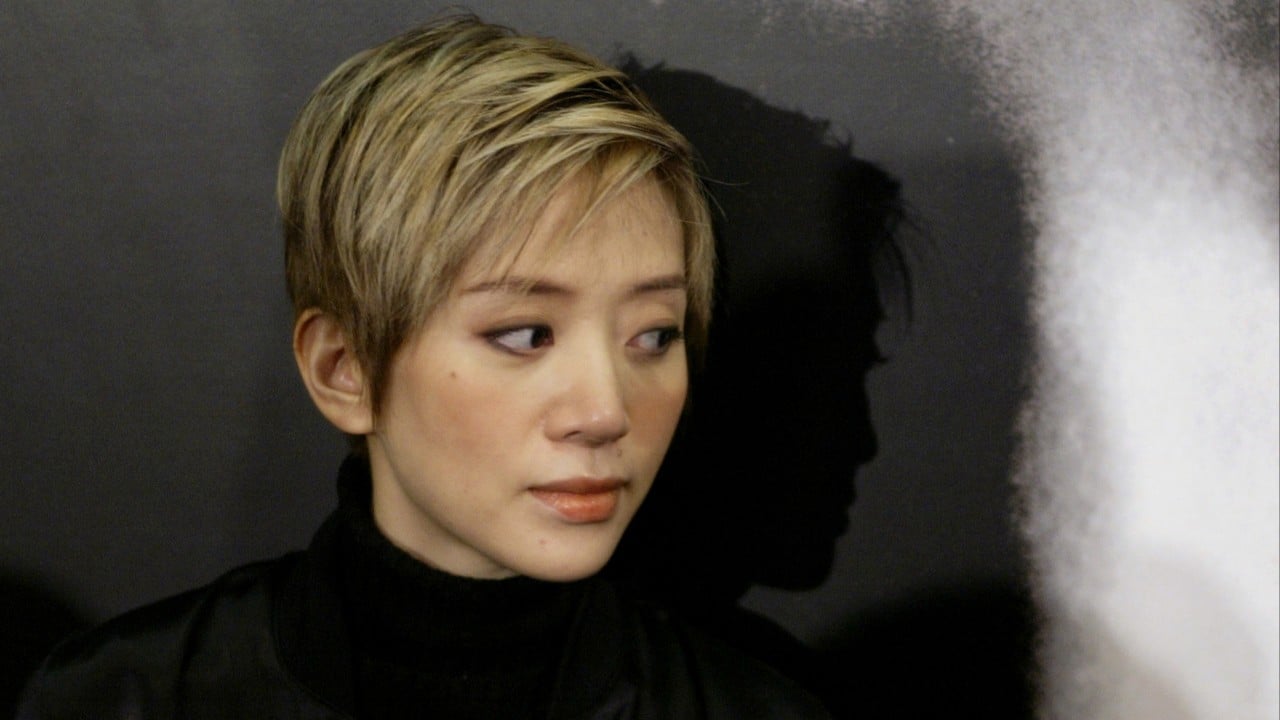
Foreign diplomats embrace China's livestream commerce
Drought conditions have been reported in 97 regions across the country, with the situation particularly severe in Yeongcheon, North Gyeongsang Province, the interior ministry said Tuesday. Water storage levels in agricultural reservoirs nationwide stood at just 70 percent of the average for a normal year, the ministry said in its October drought report. The cumulative precipitation nationwide over the six months from April 2 to Oct. 1 totaled 783.3 millimeters, or 72.5 percent of the normal year average, the ministry said. As a result, meteorological drought conditions had been observed in 97 regions across the country as of Oct. 1. Of the 97 regions, 74 were classified as experiencing mild drought and 22 as moderate drought, while Yeongcheon, some 300 kilometers southeast of Seoul, was experiencing severe drought. However, the drought in Yeongcheon is expected to ease by the end of the year, as precipitation is forecast to be above normal in November and December, the ministry said.
The arms procurement agency said Tuesday it will speed up the development of nuclear-powered submarines and acquisition of artificial intelligence (AI)-based combat assets, including unmanned and counter-drone systems. The Defense Acquisition Program Administration (DAPA) unveiled the plan in a parliamentary audit, as part of a broader road map to secure core capabilities for "self-reliant" defense amid Seoul's efforts to retake wartime operational control (OPCON) of troops from Washington and North Korea's evolving military threats. "The agency will leverage existing organizations and capabilities to develop a nuclear propulsion system and establish a blueprint to construct nuclear-powered submarines," DAPA said in a document submitted to lawmakers. "We plan to launch a full-scale acquisition of combat unmanned systems, such as combat uncrewed surface vessels and small attack drones, as well as anti-drone networks, including laser air defense weapons and integrated counter-drone systems for front-line border areas," the agency said. South Korea is pushing to build nuclear-powered attack
President Lee Jae Myung on Tuesday stressed the importance of the country's alliance with the United States but also noted a submissive stance should be shunned in pursuing diplomacy. The president made the remarks at a Cabinet meeting, amid concerns over apparent friction in the Seoul-Washington alliance, highlighted by South Korea facing limitations in intelligence sharing by the U.S. Lee said diplomacy should be focused on safeguarding national interests, while emphasizing that differences can arise between countries. "Diplomacy should be pursued in a way that always upholds South Korea's dignity and safeguards its national interests (while) any submissive or kowtowing stance should be shunned," the president noted. "The guiding principle of South Korea's diplomacy is pragmatism. The most important thing for South Korea is its national interests," Lee stressed. His remarks come as South Korea continues to face restrictions on intelligence sharing by Washington, reportedly over the South Korean unification minister's previous remarks identifying North Korea's Kusong as a site housing a
National Assembly Speaker Cho Jeong-sik has met with Greek President Constantine Tassoulas and the Greek parliamentary leader to discuss bilateral cooperation in defense and shipbuilding, his office said Tuesday. During his meeting with Tassoulas in Athens on Monday (local time), Cho expressed hope that the participation of Korean companies could contribute to strengthening Greece's defense amid intensifying security threats in Europe. Cho highlighted the two countries' "blood-forged" ties during the 1950-53 Korean War, pointing out that Greece dispatched some 10,000 troops to Korea despite not having established diplomatic relations with Seoul at the time. "We look forward to further deepening cooperation in the shipbuilding and shipping sectors and expanding it into future industries, including defense," Cho was quoted as telling the Greek president. In a separate meeting with his parliamentary counterpart, Nikitas Kaklamanis, Cho said the two countries should expand bilateral cooperation beyond shipbuilding and shipping into areas of advanced technologies and defense. Cho is on a four-
Senior diplomats from South Korea, the United States and Japan held telephone consultations Tuesday to share information and discuss responses to North Korea's latest ballistic missile launches, Seoul's foreign ministry said. On Monday, North Korea fired multiple ballistic missiles toward the East Sea, according to South Korea's Joint Chiefs of Staff (JCS). The North said Tuesday it test-fired a "tactical" ballistic missile the previous day to verify technological improvements to a key component of its weapons systems. Baek Yong-jin, director general for Korean Peninsula policy at Seoul's foreign ministry, spoke with David Wilezol, deputy assistant secretary for Northeast Asia at the U.S. State Department, and Takashi Ariyoshi, a senior official at Japan's foreign ministry, the ministry said. "The three officials shared relevant information and discussed future responses," the ministry said in a press release. "The foreign affairs authorities of the three countries operate a channel for promptly sharing information and assessments whenever North Korea launches ballistic missiles," it add
North Korea and Russia have signed an agreement to expand bilateral cooperation on disaster management for the next three years, the North's state media reported Tuesday. Kim Chol-nam, the North's minister of disaster management, and Aleksandr Kurenkov, the Russian minister of extraordinary situations, signed the agreement in Pyongyang the previous day to boost cooperation on the matter from 2027-2029, according to the Korean Central News Agency (KCNA). The "successes and experience gained by the two countries in the work to prevent disaster were exchanged and the issues of boosting bilateral exchange and cooperation were discussed," according to the report. A delegation from Russia's emergency ministry arrived in Pyongyang on Sunday for talks with its North Korean counterpart on ways to deepen cooperation in disaster management. The visit came as the Russian ministry and the North's corresponding ministry signed an agreement on specialist training and scientific and technical cooperation in December.
North Korea has opened a new defense museum featuring a wide range of weaponry, including its new intercontinental ballistic missiles (ICBMs), with leader Kim Jong-un in attendance, state media reported Tuesday. An opening ceremony of the National Defense Revolution Museum took place Sunday, according to the Korean Central News Agency, on the occasion of the 81st founding anniversary of the Workers' Party of Korea (WPK), which falls on Oct. 10. Kim inspected the museum with the party's central leadership, including the secretaries of the WPK central committee and commanding officers of the North's national defense ministry, among others. His wife and daughter, Ju-ae, were also present for the event. Kim touted the new defense museum as a "revolutionary treasure" that can only be possessed by the WPK and a "precious monument" that he said can only be built by the "powerful state and people with their absolute strength powerful enough to defend themselves." The North Korean leader emphasized that it was a "due obligation" of the WPK to build the defense industry into the most powerful one
The new tvN weekend drama "100 Days of Deception" directed by Yoo In-sik and written by Rheu Bo-ri has captured viewers, breaking through a 7 percent viewership rating in just two episodes. Set in 1932 Gyeongseong, Seoul's old name, the drama seamlessly weaves tense espionage with a deeply moving storyline, sparking enthusiastic reviews among K-drama fans. The series immediately grabs attention with its stylish direction. The opening sequence mixes black-and-white film footage reminiscent of historical documentaries with upbeat music, creating an engaging atmosphere without feeling overly heavy. Set 13 years before liberation, 1932 was an era when Japanese colonial control over Gyeongseong reached its peak, while secret independence movements stirred deep underground. The storyline introduces fresh character archetypes into this historical whirlwind, notably a pragmatic pickpocket turned spy and a former street beggar turned Japanese elite official. The opening episodes delivered exceptionally emotional resonance through the powerful acting of Kim Hyun-joo and Lee Mu-saeng. Kim Hyun-joo
As missiles and drones take a bigger role in modern warfare, major defence contractors gathered in Washington this week to showcase their latest advances in the technologies – and systems to counter them. The three-day Association of the United States Army (AUSA) Annual Meeting and Exposition, which opened on Monday, is one of the largest ground-based weapons shows in the US. This year there was a strong emphasis on air and missile defence systems, reflecting growing concern about how to counter...
Hong Kong police have stepped up their investigation into the disappearance of the ashes of late Cantopop diva Anita Mui Yim-fong by committing more resources and manpower to the case. Mui’s family had revealed over the weekend that the urn containing the singer’s remains was discovered to be missing from Po Lin Monastery on Lantau Island three months ago, complaining that police had made “no progress” in their investigation and that the incident had caused “immense distress”. A police spokesman...
Paris Motor Show opens with record number of Chinese brands